Interior Designer vs Interior Decorator: What’s the Difference?
July 21, 2026 by Tijendra SEO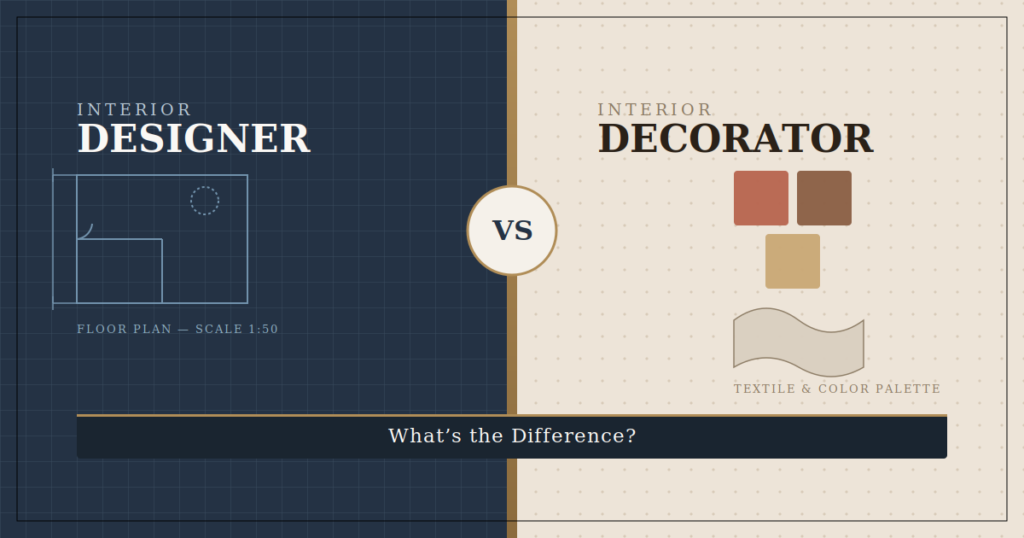
If you’re going to start transforming a home, you’ll probably run into the job titles that are used almost interchangeably: dresser and decorator. Many owners assume that they refer to the same page, but the fact is that these are specific schools, competence units and work areas.
In this guide, we will break down exactly what each professional does, how their knowledge differs, and who is right for your particular project.
Who Is an Interior Designer?
An interior designer is a trained expert who works on the structural and functional aspects of the area, now not just the visual appeal. Interior design is a technical field that typically requires formal schooling, an understanding of building codes, and knowledge of structure, space design plans, lighting, ergonomics, and materials .
What Does an Interior Designer Do?
So, what exactly does an interior weaver do? Their duties typically include:
- Analyze how the field works and change the configuration to a better float
- Creating specialized floor plans, 3D renderings and technical drawings
- Choosing materials, finishes and fixtures to suit each style and feature
- Coordination with architects, contractors and engineers during construction or preservation
- Managing lighting design, ventilation, and acoustics as part of the overall plan
Because their work often involves structural changes, a Professional Interior Designer is usually involved from the earliest stages of a project, sometimes even before construction begins. If you’re curious about the full scope of this discipline, our detailed post on what is interior design explains the process from concept to execution.
Interior Designer vs Decorator: Key Differences
When evaluating an interior designer vs. interior designer, the difference really comes down to training, scope, and time of involvement.
- Education and Training Interior designers typically have retained a degree or certificate in interior design, structural design, or a related discipline. They have looked at building codes, structural structure and zoning. Decorators, on the other hand, often rely on the herb eye for fashion, color theory, and design qualities, which are followed now and again with brief tutorials.
- Scope of work Designers can trade room designs, replace walls, renovate kitchens or plan lighting fixtures from scratch. Interior designers work in its current form, specializing in how the area looks instead of how it functions.
- Project Time An interior designer is usually employed at the beginning of construction or preservation, working with architects and contractors. A decorator is often added after the entirety of the creation, to provide and fashion the entire space.
- Cost and Investment Because designers handle technical planning and often supervise contractors, their services tend to be higher investments. Interior design services are generally more budget-friendly because there is no structural work involved.
- Licensing In many areas, interior designers may seek certification or licensing, especially for business initiatives involving structural changes. Decorators generally do not need a formal license.
If you’re weighing which route to take for a renovation versus a simple refresh, our article on top 7 qualities to look for in a professional interior designer can help you evaluate the right expert for a bigger project.
When Should You Hire Each?
Choosing between Interior Design Services and Interior Decorating Services depends entirely on your project’s needs.
Hire an interior designer if you:
- Are building a new home or doing a major renovation
- Need to reconfigure room layouts or knock down walls
- Want a completely functional redesign of your kitchen, bathroom, or living spaces
- Need help with lighting plans, plumbing points, or electrical layouts
- Are working on a commercial space that requires code compliance
Hire an interior decorator if you:
- Love your current layout but want a fresh new look
- Need help selecting furniture, colors, or accessories
- Want to style a single room or refresh your décor for a season
- Are moving into a new home and need furnishing guidance
- Have a smaller budget and don’t need structural changes
For homeowners who aren’t sure which service applies to their specific space, our guide on how interior designing is different from interior architecture offers another useful comparison that adds more clarity to this topic.
Can One Professional Do Both Jobs?
Indeed, many specialists these days offer a mix of both services. A residential interior designer, for example, handles much of the technical planning and final design, providing homeowners with an unbroken, delivery experience This is common primarily for full-carrier home interior design firms that handle everything from floor plans to final furniture installation.
This hybrid approach has become increasingly popular because it eliminates the back-and-forth between two professionals and ensures the final look aligns perfectly with the functional plan. Before signing on with any firm, it helps to ask the right questions; our post on 10 questions to ask before hiring an interior designer walks through exactly what to clarify upfront.
Residential vs Commercial Considerations
It’s also worth noting that the designer-decorator distinction plays out differently depending on the type of space. Commercial projects often require more technical expertise due to safety regulations, accessibility standards, and heavier structural demands, while residential projects offer more flexibility for a decorator-led approach. If you’re planning a project for an office or retail space alongside a home, our comparison on commercial vs residential interior designers breaks down how the requirements shift between the two.
Final Thoughts
Understanding Interior Designer vs Interior Decorator ultimately comes down to matching the appropriate knowledge to the scope of your challenge. Whether you’re changing the layout of a room, planning a new creation or wanting technical understanding, a built-in chest of drawers is the way to go. If your structure is already in perfect shape and you definitely need a smart upgrade, an interior designer will get you there faster and cheaper.
Many homeowners believe that running with a company to provide understanding of layout and decoration under one roof is the greenest route that ensures your space is not only focused but also in good style from start to finish.